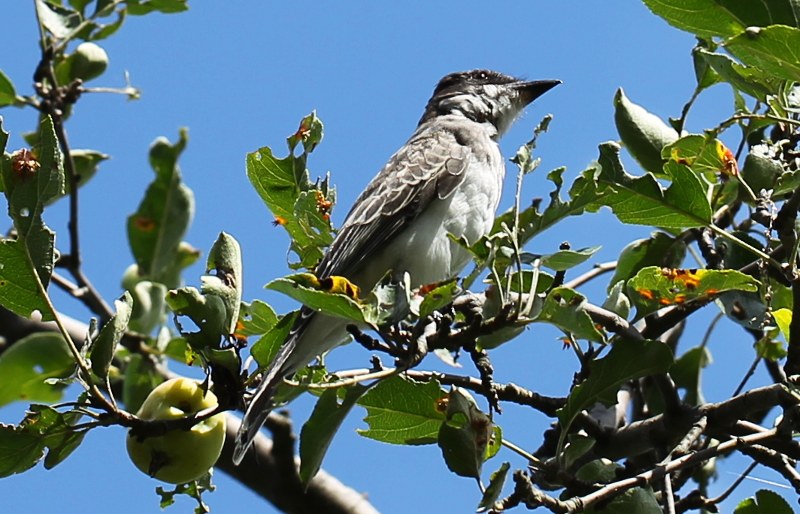
Late last week, I went to the Explorers’ Garden on Bussey Hill on a pleasant, sunny day. A few butterflies passed me by but did not perch. The eastern kingbird below paused at a the top of a crabapple tree. In about a month, this kingbird will probably make its way to South America for the winter.
I’ve posted about the birds and sea creatures that we saw on our camping trip at the Cape Ann campsite. We also found a few bugs during our explorations.
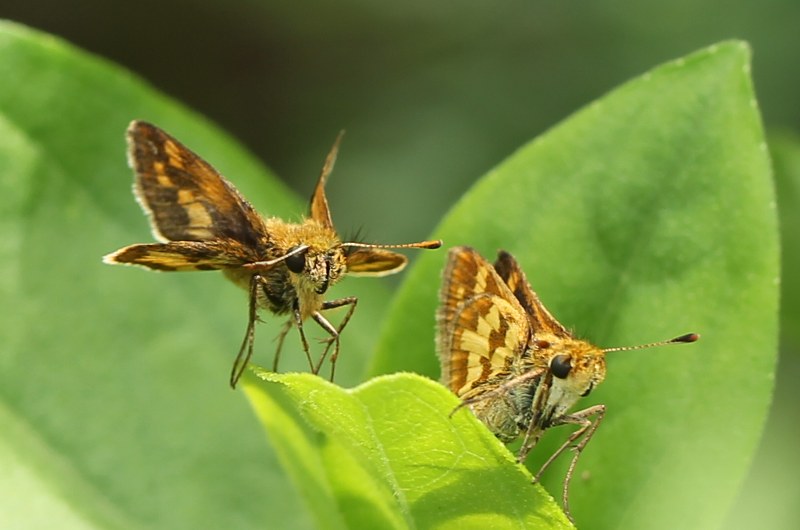
The office on the campgrounds has a nice flower and vegetable garden a few feet away. We found a couple of Peck’s skippers (Polites peckius), which settled on a leaf after chasing each other.
Two of the fastest-growing native trees in the Northeast are duking it out on Paul Gore Street in Jamaica Plain. An eastern white pine and a silver maple arch over the street, meeting in the middle.
Silver maple (left) and eastern white pine (right) over Paul Gore St
Update on June 2, 2016: The white pine has won the battle. The silver maple was cut down today. It had dropped some large limbs during recent storms and was probably deemed a public hazard. Still, it’s sad to see an urban giant go.
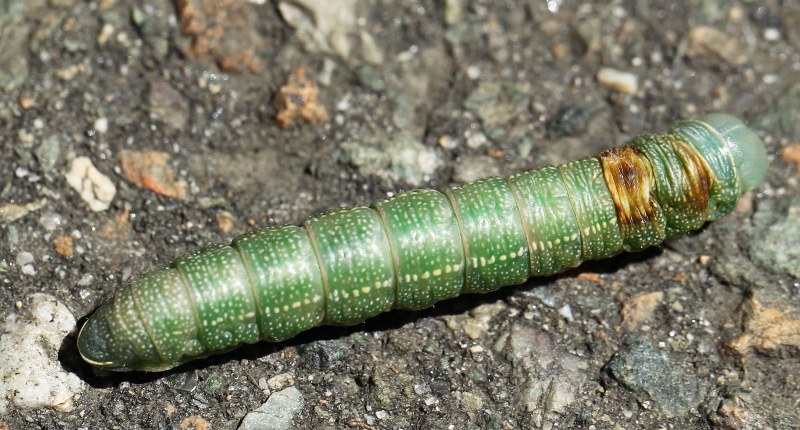
I found this white-dotted prominent caterpillar (Nadata gibbosa) crawling across Meadow Road yesterday. A green caterpillar with an opaque, lighter green face, it is covered with white dots. This one had two brown patches on it, perhaps some sort of infection?
I opened my window yesterday evening and a bug came flying in. With the loud drone of its wings, I initially thought it was a wasp and backed away. But it turned out to be a western conifer seed bug (Leptoglossus occidentalis).
Western conifer seed bug
This bug started out in the West (hence its name), but has since spread to the eastern U.S. and even Europe. They love to find their way into homes in the spring and fall. Apparently this bug didn’t get the memo: it’s still summer!
We left our campsite on bikes and rode to Wingaersheek Beach. If you arrive on bicycle, you will not be charged an admission fee. Bicycle parking is scarce, though, and we had to lock our bikes halfway up a “resident parking” sign.
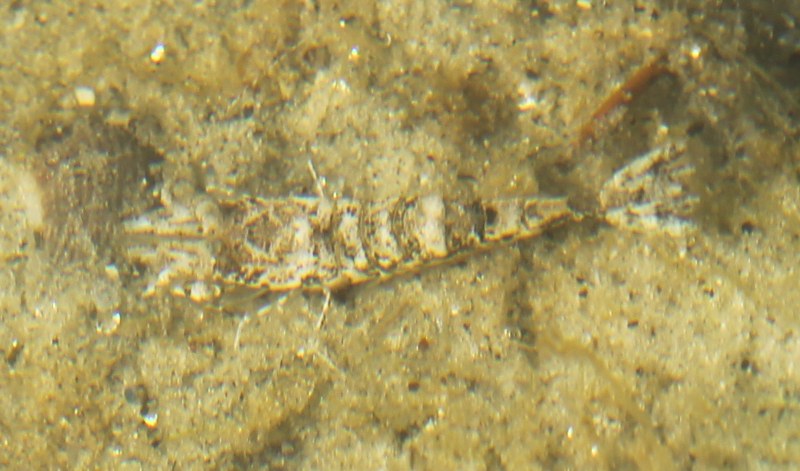
We arrived near low tide and got to exploring the tide pools around a few large boulders. Even with its clever camouflage, a sand shrimp (Crangon septemspinosa) could not hide from us. This species of shrimp is commonly found in our shallow waters. Its color varies, probably to better blend in with its sandy surroundings.
We went camping in Gloucester at the Cape Ann campsite this past weekend. On a sunny evening, we walked across the road to the Jones River Salt Marsh to look for birds. The tide had come in and the larger birds that we hadn’t seen at low tide had returned.
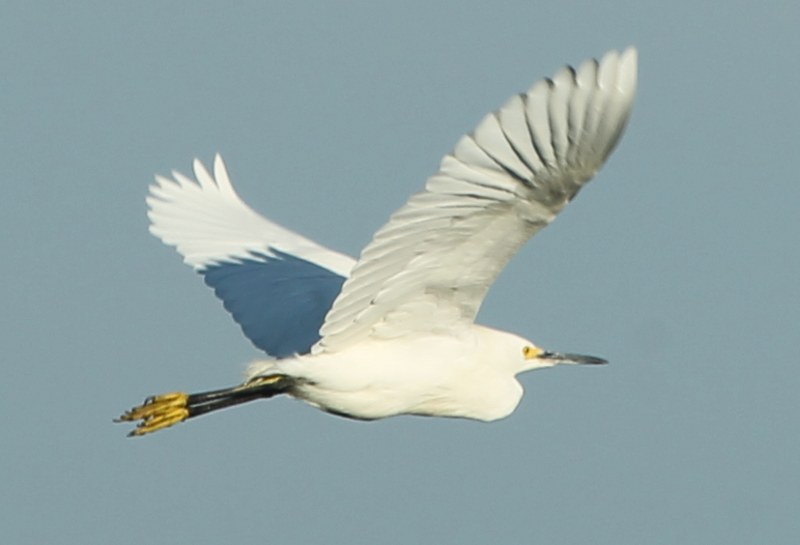
We saw a snowy egret with its snow-white feathers, dark bill, and yellow feet. I had seen this bird on a California beach but this was my first time seeing it in Massachusetts.
Exploring in the meadow of the Arnold Arboretum last weekend, I came upon this giant water bug (Belostoma sp.). This large insect — they named it “giant” for a reason — preys on creatures as large as small fish. It can inflict a very painful bite, and so is also called toe biter. Thanks to John Epler for the ID.
On my walk around Ward’s Pond last week, I saw a pair of hungry baby robins eagerly awaiting food from their parents.
A pair of baby robins
The Pond’s boardwalk, which had been shut down for years, has been re-opened. According to the July 22 edition of Boston’s City Record, the 250-foot boardwalk was damaged by storms in 2010. Its restoration by the Boston Parks and Recreation Department, to the tune of $111,000, was funded through FEMA’s Disaster Recovery Assistance Fund and the Mayor’s Capital Plan. Continue reading →
I like to call Ailanthus altissima the tree of good or evil. Depending on your perspective, it is either the “ghetto palm,” an invasive pest, or the “tree of heaven,” a tough, hardy street tree once planted for its beauty.
Introduced into the United States from China in 1748, it was being planted as a street tree by the 1820s. Pollution-resistant, salt-tolerant, quick-growing, and with tropical-like foliage, what was not to love about this tree?
Typical greenish-yellow fruit of Ailanthus
Peter Del Tredici, senior research scientist at the Arnold Arboretum, held a tree mob on July 22 on a specimen of this tree (accession #695-80-B). Before eventually turning brown, most ailanthus trees have fruit that go from green to yellow. The tree that Del Tredici collected goes from green to red, hence the form “erythrocarpa,” which means red fruit. Del Tredici described the red on the tree as a spontaneous mutaton that appears sporadically. Continue reading →