We went on an early morning bird walk yesterday led by Bob Mayer and Andrew Joslin. We saw a number of bird species. Two were a first for me, and one a first in the Boston area.

Continue reading
We went on an early morning bird walk yesterday led by Bob Mayer and Andrew Joslin. We saw a number of bird species. Two were a first for me, and one a first in the Boston area.
Continue reading
On Wednesday, I heard something rustling in the grass near the Arboretum’s hickory collection. Turned out to be this garter snake (Thamnophis sirtalis), a skinny fellow who was quite afraid of me.

Continue reading
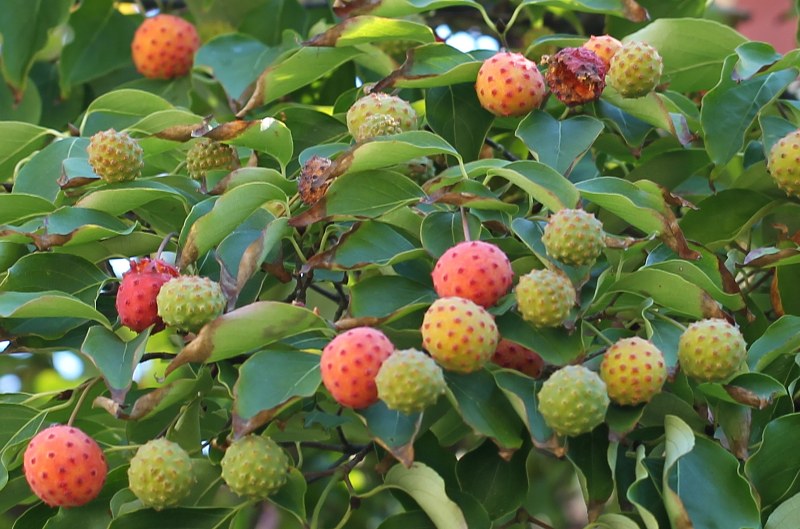
We passed a kousa dogwood tree (Cornus kousa) on Parley Ave yesterday afternoon. The ripening fruit look like berries. They are edible, but don’t taste so great.
Kousa dogwoods are native to east Asia and their fruits differ from our local flowering dogwood in that they are compound and much larger. It is possible that these fruits evolved this way to appear more appetizing to macaque monkeys, who would eat the fruit and disperse the seeds.
Continue reading
We saw quite a few birds last Monday on our trip to Spectacle Island, including a species of gull for the first time. We counted 45 double-crested cormorants near the island’s shores.

Continue reading
The last time I explored tide pools on the Boston Harbor Islands, I was taking Bruce Berman’s Snails to Whales class. We learned the geography of the Harbor, visited the islands, learned about the clean-up, and saw so many creatures I never knew existed in this area. We saw a few of those same creatures on Spectacle Island this past Monday.
Taking cover near a rock, this Asian shore crab (Hemigrapsus sanguineus) does its best to remain hidden. This non-native crab can be distinguished from others in our area by the three “teeth” it has running down each side of its shell. Other species have at least five.

As I left the Arboretum’s visitor center on Sunday, I noticed a crowd gathered around a shrub. It took me a second to see the shockingly large Chinese mantid (Tenodera aridifolia) that was the subject of everyone’s attention.
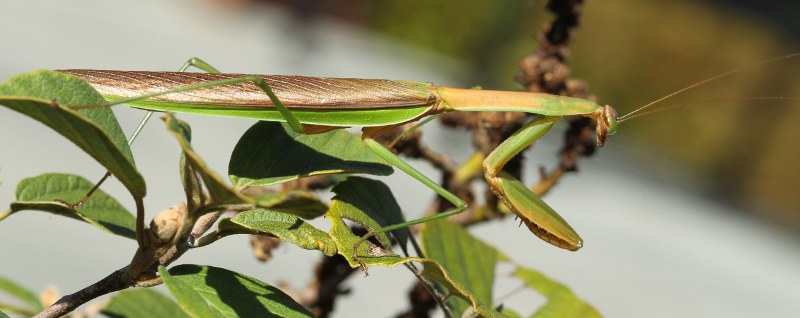
This praying mantis was larger than my hand. It had landed on someone’s leg and she had the peace of mind to place it on the shrub, where it stood still for many minutes.
The Chinese mantid is the largest of our praying mantises. Introduced from China in 1896 to control pests, they eat both harmful and beneficial insects, and sometimes each other. They are so large that they are able to attack hummingbirds.
Take a look at this face. It means business.

Continue reading
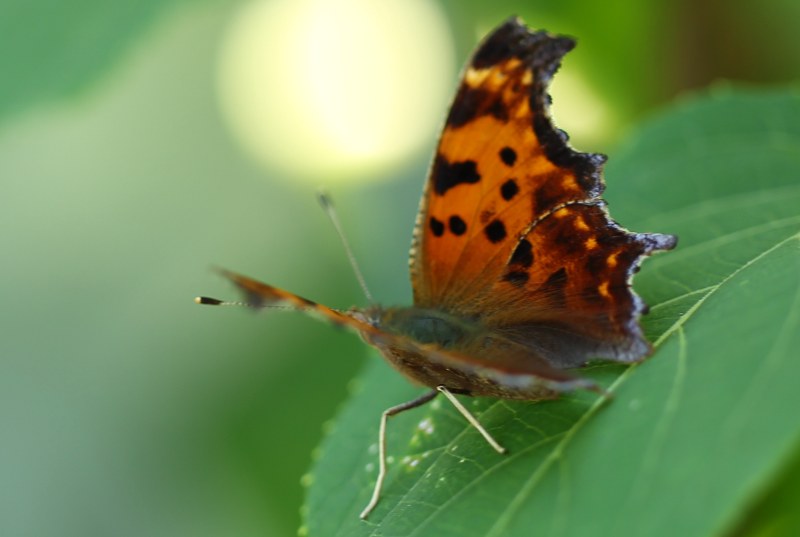
I saw a few moths, butterflies, and wasps at the Arboretum last week. An eastern comma butterfly (Polygonia comma) rested on a leaf in the shrub and vine garden. It is named for the bright white comma, swollen at both ends, on its wing. I think it looks more like a crescent moon than a comma.

The wings look drab until they open, revealing a rich orange with black spots. This is the winter form of this butterfly, with its hind wings more orange than black.
Continue reading
Honey locust trees in Christopher Columbus Park near Long Wharf have already started to turn. A good number of their leaflets were yellow this afternoon. Most of the honey locust trees in the city are still green, but probably not for too long.

A bittersweet vine (Celastrus sp.) twists around a tree trunk in the Arboretum with tiny black creatures crawling on it. I believe these are black bean aphids (Aphis fabae). These aphids are sucking the sap out of the vine. While they prefer eating from the bounty of the bean family, they are known to attack bittersweet.
Like other aphids, they produce a sweet waste product called honeydew. Ants are attracted to the honeydew and collect it, tending aphids as we do cows. In the photo below, a black carpenter ant (Camponotus pennsylvanicus) watches over a black bean aphid, waiting for its sugary treat.

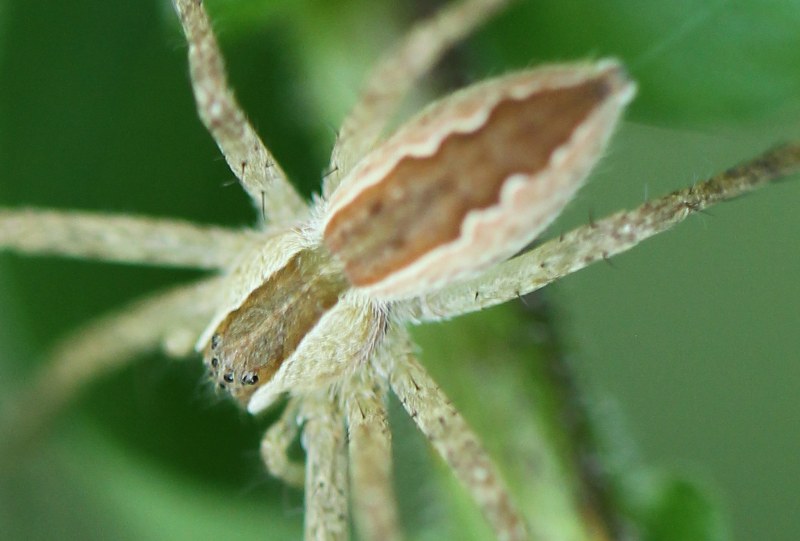
I didn’t let summer’s final gasp of heat and humidity deter me from a walk in the Arboretum on Wednesday, although, after a month-long break in 90-degree heat, I felt like I was experiencing the first hot day of the season. I spotted a nursery web spider (Pisaurina mira) biding its time under a leaf. Note how it rests with its two front legs touching each other.
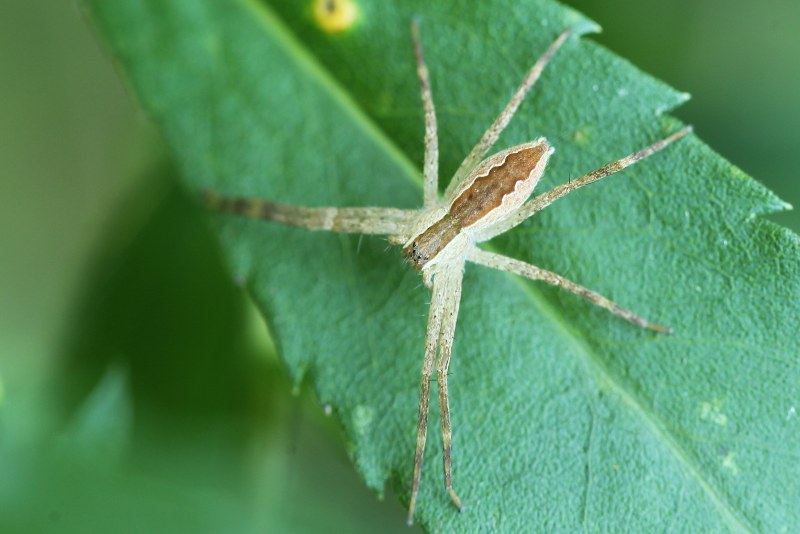
This spider has a dark stripe running down the middle that is bordered by a white margin, which undulates along its abdomen. Also note the white hairs along its body and the black spines on its legs.
Continue reading