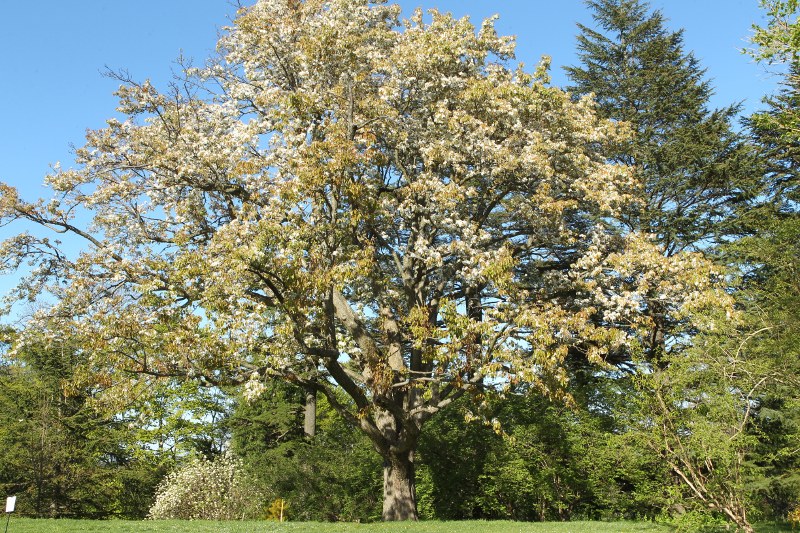
Black locust trees (Robinia pseudoacacia) are an invasive species in Massachusetts, but it is difficult to dislike them this time of year, when the trees perfume the air with a jasmine-like scent. The trees can no longer be legally planted. Older trees can be found in yards, but most of these trees grow in minimally-maintained spaces.
The elevated Central Artery running through downtown Boston was dismantled starting in 2004 as part of the Big Dig. The automobile traffic that would have taken the highway now moves below ground. In its place, Boston got the Greenway. On Thursday, I took a tour of the Greenway parks.
The tour was led by Darrah Cole and Anthony Ruggiero, horticulturists working for the Greenway Conservancy, the non-profit group that manages the parks.
Our group started at the Chinatown gate. The park there has reduced green space because the community asked for a plaza where they could hold events. One end of the plaza is lined with Dutch elm-resistant ‘Frontier’ elms. These elms are a hybrid of the European field elm (Ulmus minor) and the Chinese elm (Ulmus parvifolia).
For populations to evolve, mutations are necessary. These changes in the genetic code often go unnoticed but, when they do affect the plant’s development, horticulturists select for the ones that make plants more productive or pleasing to people. In Tuesday’s tree mob, the Director of the Arnold Arboretum Ned Friedman spoke to us about a clearly visible mutation in an eastern redbud tree close to the katsura collection (accession #10-68*B).
Ned Friedman speaking on a mutation in an eastern redbud tree
Friedman first introduced the botanical term “cauliflory,” a reference to plants that flower from old growth. Redbud is one of these plants. See the photo below for flower buds on the trunk of the tree.
Eastern redbud flower bud on the trunk
Friedman then pointed out that one branch of the redbud tree had white flowers, in contrast to the reddish-purple flowers on the rest of the tree. Because eastern redbud flowers on old growth, he was able to pinpoint the location on the branch where the mutation knocking out the anthocyanin pigment in the flowers must have occurred. He guessed that the mutation occurred between ten and twelve years ago.
The point on the branch where the reddish-purple flowers turn to white flowers
Friedman said that the mutation exists in every cell from that point on the branch onward and, as long as the flowers don’t cross-pollinate with reddish-purple flowers, will be seen in any plants grown from the seeds that develop on the branch.
This tree mob was the first in a series of three tree mobs that Friedman will lead on mutations in plants.
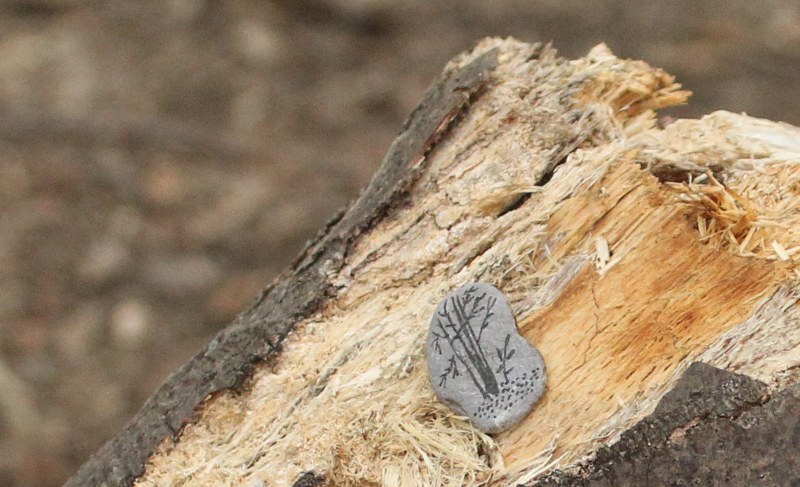
Jef led us on a walk along the banks of the Muddy River on a sunny, seasonal spring day. We first stopped to view some outdoor sculpture as part of the Through the Trees exhibition by studios without walls.
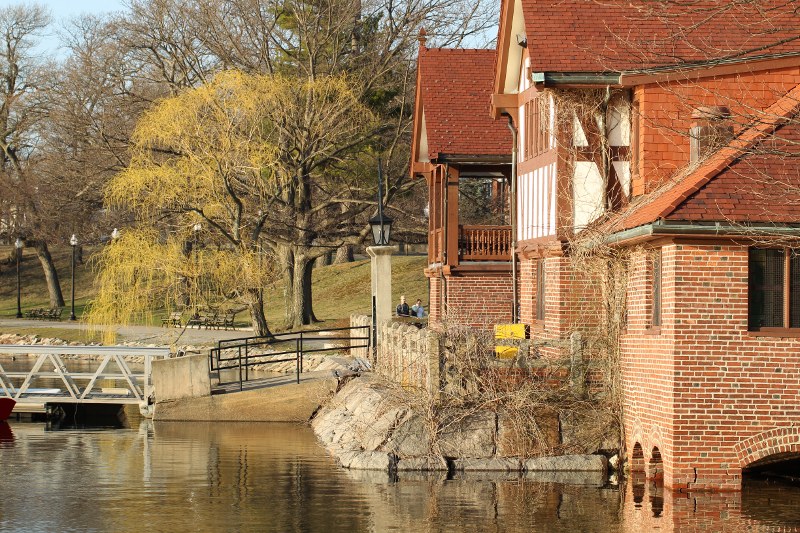
On this tragic day, when senseless acts of violence have hurt so many, I am grateful for the places of peace in our city. Jamaica Pond is one of those places, an oasis of peace and calm amidst the chaos of the day. We walked its shores, sirens continually wailing along the Jamaica Way as emergency vehicles rushed downtown.
It is easy to miss maple flowers, especially on large trees. From a distance, the branches appear to blush and that is all. Look closely and you’ll see a profusion of anthers leaping out of short, red petals.
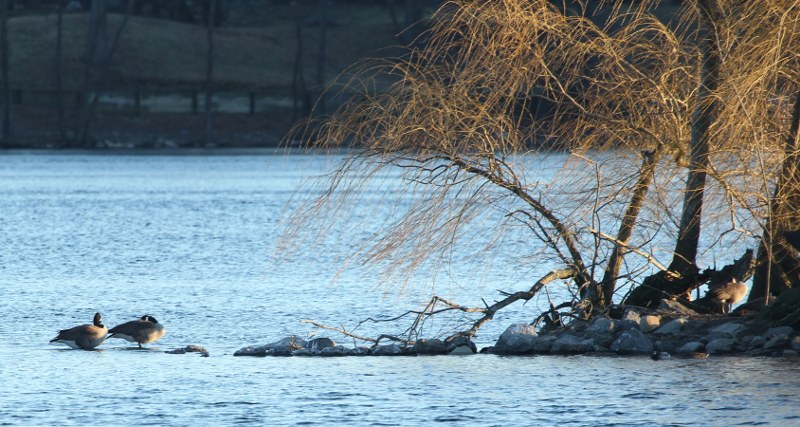
Jamaica Pond is finally ice-free! The wind coming off the water yesterday, however, did not feel like it. We took a walk as the sun set.
American coots were diving for vegetation and then squabbling once a coot was successful at obtaining some. It’s late in the year for the coots, which should leave for their summer breeding grounds in the Upper Midwest and Canada any day now.
With snow on the ground and a chill in the air, Saturday did not feel like spring. But the birds at the Arnold Arboretum were singing their spring songs. We found large concentrations of birds near the Visitor Center and around Faxon Pond.
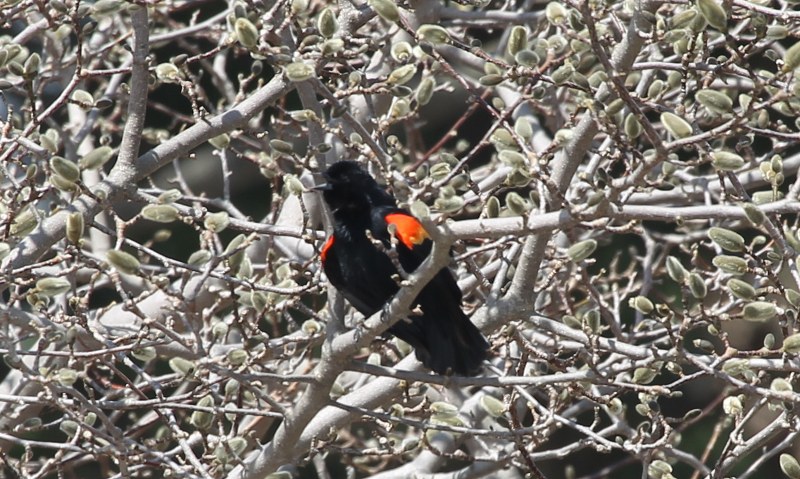
The red-winged blackbirds, all males as far as we could tell, were singing loudly. Common grackles, another sign of spring, checked us out with those freakishly white eyes of theirs.
Male red-winged blackbird showing off his red wing patches.